The Art of a Wedding Invitation: Why the First Impression Still Matters
For those already preparing to say “I do” in 2027, now is an excellent time to start thinking about one of the first, and perhaps most underestimated, elements of wedding planning: the invitation.
Before the flowers are arranged, the tables are dressed and the first guests arrive, your wedding has already begun. It begins the moment an invitation reaches someone’s hands. A wedding invitation is far more than a practical announcement of a date, time and location. It is the first introduction to the celebration you are planning, communicating its level of formality, offering a glimpse of the atmosphere/style/theme, and, most importantly, making your guests feel that their presence is genuinely valued.
As with so many aspects of etiquette, the smallest details often make the greatest difference.
The First Act of Hospitality
We often associate hospitality with welcoming guests at the door, offering refreshments or ensuring that everyone feels comfortable during an event. Yet hospitality begins long before anyone arrives.
A wedding invitation is, in many ways, the first gesture of hospitality extended to your guests. It communicates not only the practical details of the celebration but also the care and consideration behind it. A thoughtfully prepared invitation makes the recipient feel welcome, appreciated and genuinely included in an important moment.
There is considerably more to wedding invitation etiquette than choosing beautiful stationery. Cultural traditions, religious ceremonies, family arrangements and the level of formality can all influence its wording and presentation. A wedding in Switzerland may follow different conventions from one in the United Kingdom, Italy or another part of the world, while international couples may wish to combine elements of several traditions.
This is precisely where modern etiquette becomes particularly valuable. It provides the knowledge to understand established conventions while allowing us to adapt them thoughtfully to contemporary life. The objective should never be to follow traditions simply because they exist, but rather to understand their purpose and decide how they can best serve the occasion and the people involved.
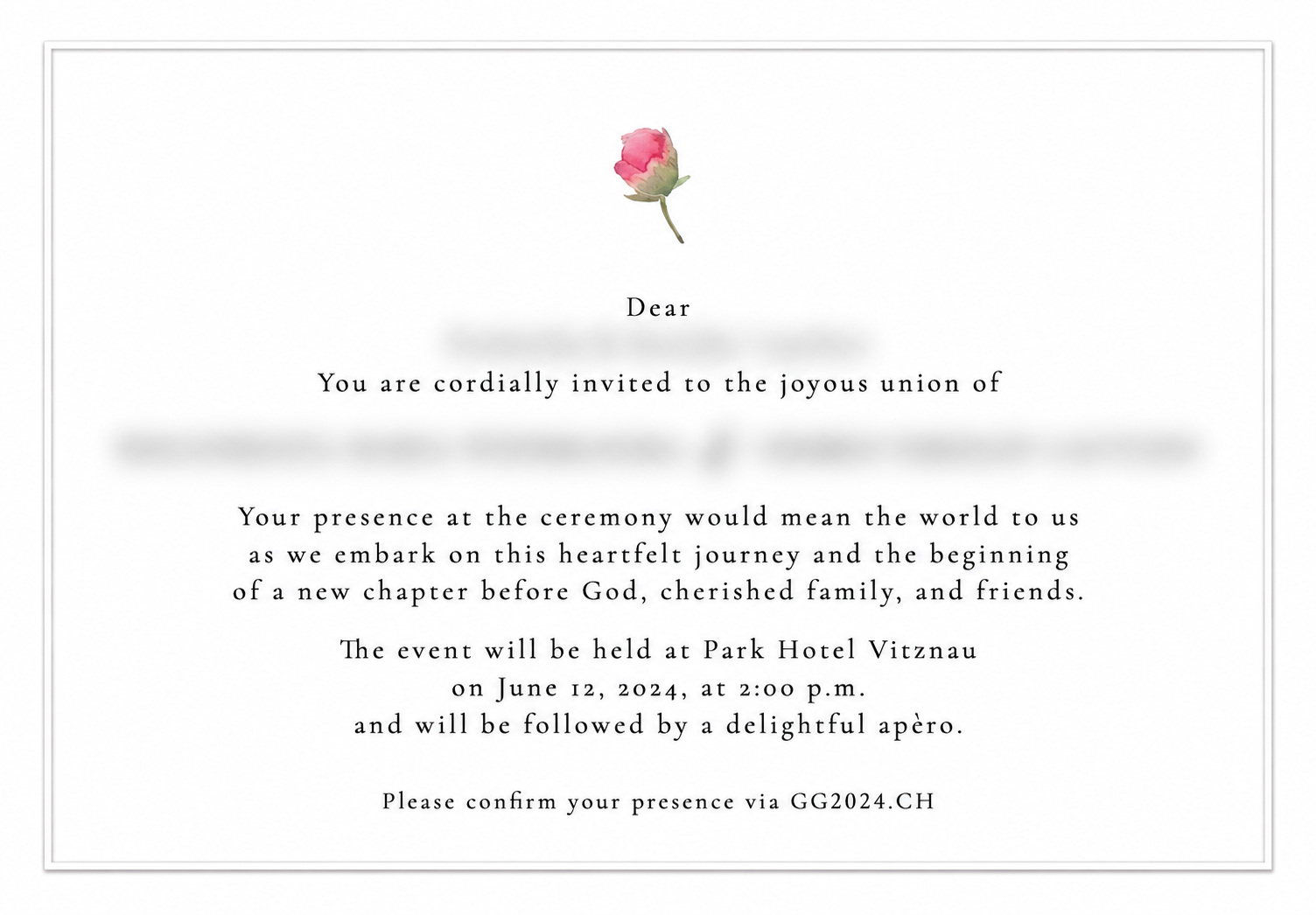
Wedding Invitation
Paper or Digital? Does It Really Matter?
We live in a world where almost everything has become digital, including the way we invite people into some of the most meaningful moments of our lives. Digital invitations are convenient, economical and increasingly popular. They can reduce paper consumption and make communication easier for international guests. From a modern etiquette perspective, there is nothing inherently inappropriate about choosing a digital wedding invitation. A thoughtfully designed digital invitation can be just as respectful as a printed one.
Yet, personally, I remain an advocate of the traditional paper wedding invitation. Why? Because an invitation does more than communicate information. It sets expectations, creates anticipation and signals that something meaningful is about to take place.
There is something wonderfully special about opening your letterbox and discovering a beautifully addressed envelope among the usual collection of bills, advertisements and everyday correspondence. You open it, unfold the card and discover that you have been invited to witness one of the most important moments in someone’s life. It is a small experience, but a memorable one. A paper invitation can be held, admired and kept. Years later, it may still be tucked away in a drawer or a memory box, a reminder of a celebration once shared.
Of course, digital invitations have their advantages, and for some couples they will be the most practical and considerate choice. But for an occasion as significant as a wedding, I believe a beautifully prepared invitation, delivered by post, deserves to remain part of the tradition. Not because technology is inappropriate, but because some gestures are simply worth preserving.
We have become so efficient at communicating that we sometimes forget the beauty of making someone feel invited.
Whether you prefer the timeless appeal of paper or the convenience of digital communication, the next question is how to ensure that your invitation is both elegant and appropriate.
When Should You Start Preparing Your Wedding Invitations?
If your wedding is planned for 2027, now is a sensible time to begin exploring designs, stationery styles and wording, particularly if you are considering bespoke invitations or calligraphy. Traditionally, wedding invitations are mailed approximately six to eight weeks before the celebration. For destination weddings or celebrations involving international guests, sending them around ten to twelve weeks in advance, or even earlier, may be more considerate.
Save-the-date announcements are commonly sent six to twelve months before the wedding, especially when guests need to arrange travel or accommodation. Ideally, the invitation design, wording, guest list and addresses should be finalised three to six months in advance, allowing sufficient time for printing, calligraphy and postage. An RSVP deadline approximately three to four weeks before the wedding is often appropriate, although the venue’s requirements should always be taken into consideration.
These timeframes are recommendations rather than strict etiquette rules. What matters most is allowing guests sufficient time to make arrangements and respond without unnecessary pressure.
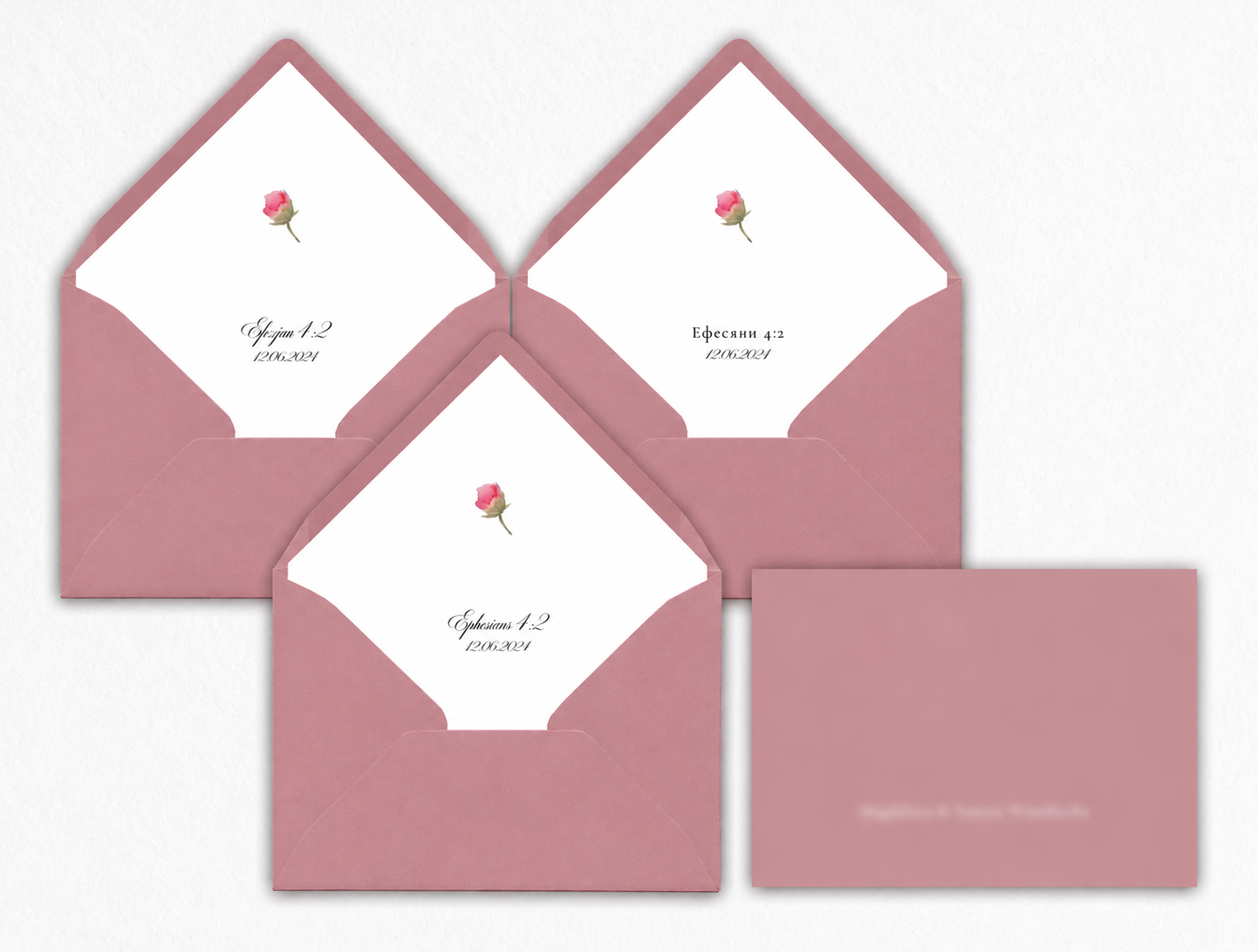
Envelope design
The Language of an Invitation: Tradition Meets Modern Etiquette
The fundamental purpose of an invitation is, naturally, to invite. Yet the way we extend that invitation should reflect the nature and formality of the occasion. Traditionally, formal wedding invitations follow carefully established conventions, particularly when it comes to wording, dates, names and titles.
For a religious ceremony, the hosts may use the wording “request the honour of your presence”, while “request the pleasure of your company” is traditionally associated with secular ceremonies and receptions. In the most formal style, dates and times are written out in full, for example: “Saturday, the nineteenth of June, two thousand and twenty-seven, at four o’clock in the afternoon.” Names are traditionally written in full, with appropriate titles, and most abbreviations are avoided.
Does this mean that a modern wedding invitation using numerals or contemporary wording is incorrect? Absolutely not. Modern etiquette recognises that traditions evolve, and couples have considerably more freedom in expressing their personal style. Writing “Saturday, 19 June 2027, at 16:00” is perfectly acceptable on a contemporary invitation, particularly in a European or international setting where the 24-hour clock is familiar. Similarly, couples may choose to omit traditional titles, use their preferred names or adopt a more conversational invitation style.
What matters is that the information remains clear, accurate and consistent with the overall character of the wedding. A formal invitation does not have to sound old-fashioned, just as a modern invitation does not have to sacrifice elegance. The purpose of etiquette is not to preserve formality at all costs, but to ensure that communication remains thoughtful, appropriate and respectful.
Who Is Actually Inviting the Guests?
One of the most interesting aspects of wedding invitation etiquette is the host line, which traditionally indicates who is extending the invitation. Historically, the bride’s parents were often responsible for hosting the wedding, and their names appeared at the beginning of the invitation. For example: “Mr and Mrs William Bennett request the pleasure of your company at the marriage of their daughter Charlotte to Alexander Thompson.” This remains an appropriate choice for couples wishing to follow traditional conventions.
Today, however, many couples organise and finance their own weddings, and their names may appear at the beginning of the invitation without mentioning their parents. A suitable wording might be: “Charlotte Bennett and Alexander Thompson request the pleasure of your company as they celebrate their marriage.” This approach is modern, elegant and entirely appropriate, even for a formal wedding.
When the couple and their families are hosting together, a more inclusive approach may be preferred: “Together with their families, Charlotte Bennett and Alexander Thompson invite you to celebrate their marriage.” This is a warm alternative, particularly when several family members are contributing to the celebration.
Importantly, the identity of the hosts does not determine whether an invitation is formal or informal. A couple hosting their own wedding can choose highly formal wording, while a parent-hosted celebration may have a relaxed, contemporary style. Modern etiquette allows the invitation to reflect the couple’s circumstances rather than requiring them to follow a particular family structure.
The Details That Should Never Be Overlooked
A beautifully designed invitation loses much of its purpose if guests are left wondering where to go, when to arrive or how to respond. A well-prepared wedding invitation should communicate the essential information clearly: the names of the couple, the nature of the celebration, the date, the time and the venue. The venue’s address must be accurate, whether it appears on the main invitation or on a separate details card.
The RSVP deserves particular attention. Traditionally, formal wedding invitations often included a separate reply card, allowing guests to confirm their attendance by post. Today, couples may choose a printed reply card, an email address or an online RSVP through their wedding website. All are acceptable approaches, provided the instructions are clear. I would always recommend specifying a response deadline, allowing sufficient time to confirm final arrangements with the venue and suppliers.
The dress code is another detail worth considering. Traditionally, formal dress codes such as White Tie, Black Tie or Morning Dress might be indicated on wedding invitations. Today, couples may also request cocktail attire, garden-party attire, semi-formal clothing or a particular theme. The dress code can be included discreetly towards the bottom of the invitation, on an accompanying card or on the wedding website. There is no universal requirement that it must appear below the RSVP.
However, one important consideration is often overlooked: a dress code should guide guests, not create unnecessary financial or practical pressure. Requesting Black Tie for an evening celebration is perfectly appropriate. Expecting every guest to purchase a new outfit in a very specific shade of lavender is considerably less considerate. If a colour palette is important to the couple, it is better presented as a suggestion rather than an obligation. After all, good etiquette considers not only the wishes of the hosts but also the comfort of their guests.
A Small Detail That Can Create a Big Misunderstanding: Addressing Your Guests
Did you know that something as seemingly insignificant as writing “and family” on a wedding invitation can create confusion? An invitation should make it clear exactly who is invited, particularly when it comes to children and additional guests.
Traditionally, envelopes were addressed using formal titles and full names, such as “Mr and Mrs Alexander Thompson.” This convention remains appropriate when it reflects the recipients’ preferences. Modern etiquette, however, allows much greater flexibility. Couples may be addressed using both of their names, regardless of marital status or whether they share a surname. Professional titles should be used accurately, and guests’ preferred names and forms of address should be respected. For example, “Charlotte Bennett and Alexander Thompson” is an entirely appropriate contemporary form of address.
The same principle applies when inviting children or additional guests. If children are included, their names should be indicated clearly, either on the envelope or through the invitation and RSVP arrangements. If an invitation is intended for two named adults only, it should not leave room for uncertainty about whether children or additional guests are included. Likewise, if a guest is welcome to bring a companion, this should be communicated explicitly rather than assumed.
A beautifully worded invitation is important. A clearly addressed one is equally so.
The Beauty of Paper, Calligraphy and Presentation
Wedding invitations may be printed, handwritten or individually addressed by a professional calligrapher. Each approach offers a different level of personalisation, craftsmanship and, naturally, expense. Handwritten invitations and calligraphy can add a particularly beautiful touch, but they require additional time and careful budgeting. Beyond the design and production costs, couples should also consider envelopes, accompanying cards and postage, particularly when invitations are being sent internationally.
For guests travelling from abroad, additional practical information may be necessary. Rather than overcrowding the invitation itself, I recommend including a separate details card, which can be as small as a business card, directing guests to the wedding website. The website can provide information about accommodation, transport, the programme, dietary requirements and gift preferences. It can also offer translations or additional explanations for guests from different cultural backgrounds.
In my view, this is an excellent example of modern etiquette at its best: combining the elegance of traditional correspondence with the practicality of contemporary technology. The invitation creates the experience, while the website provides the details.
A Final Thought
Whether an invitation is handwritten, professionally printed or beautifully designed in digital form, one principle remains universal: a thoughtful invitation makes the recipient feel welcome before the celebration has even begun.
In an age when personal correspondence has become increasingly rare, the opportunity to make a lasting impression is perhaps greater than ever. Understanding the traditions behind wedding invitations gives us the freedom to make informed choices, combining timeless elegance with contemporary practicality.
The wedding may last a day. The impression begins long before it.
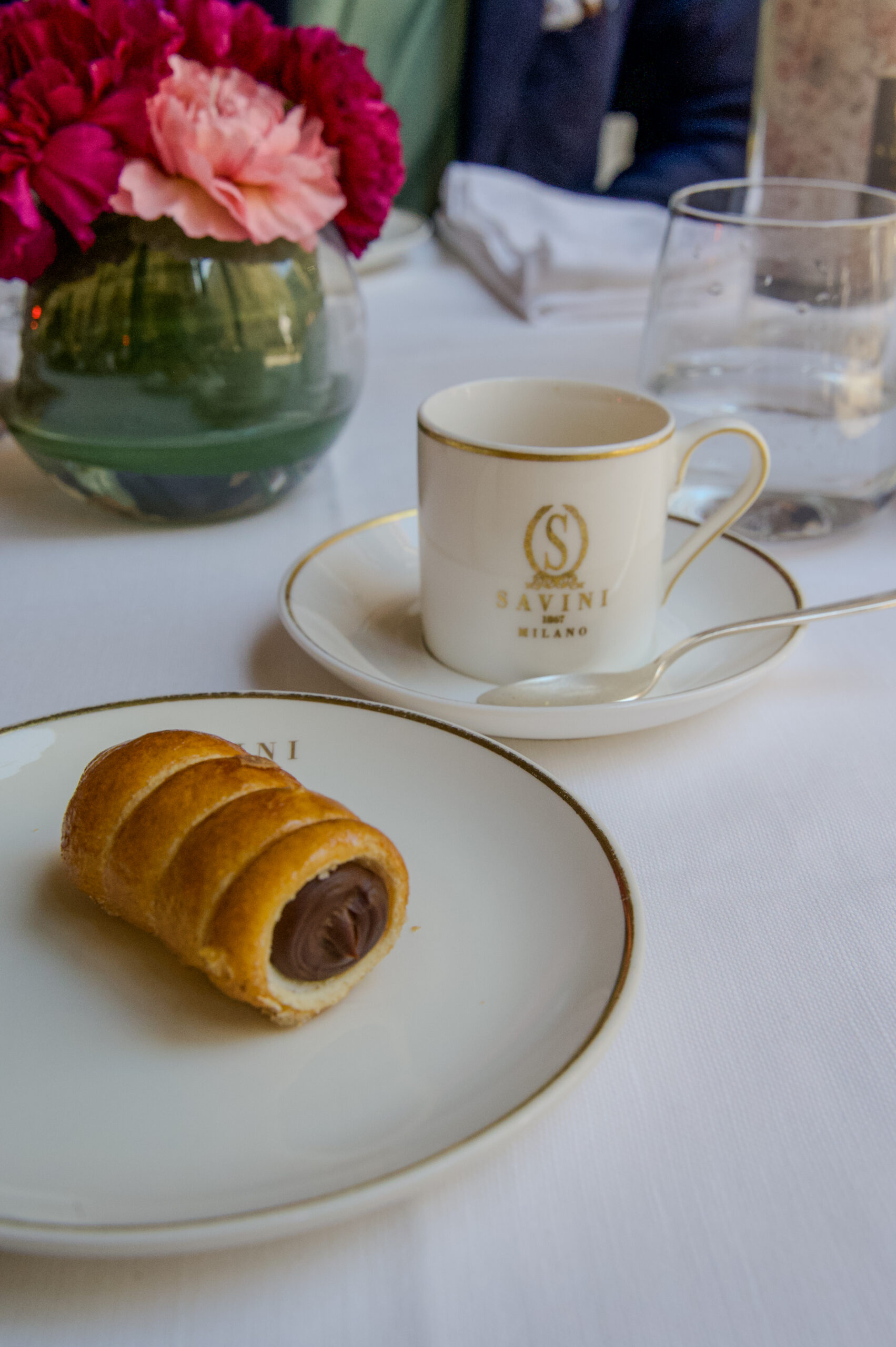

Why Knowing Etiquette Matters
Respect starts here: the value of basic mannersEtiquette might sound sophisticated, and by definition, you may think it’s not for you. The first thoughts that come to mind are often formal events, royal families, or outdated traditions that don’t seem relevant today....